One Film, Many Looks: Colour, Gradient, Patterns, App Control and LED Smart Film
Smart film is no longer just clear-or-frosted. In 2026 the same film can be tinted, printed, zoned, dimmed, automated and turned into a transparent LED video screen. Here is the full menu and what each option adds to a project.
Smart film is no longer a single product
For years, specifying PDLC film was a simple decision: standard white, on or off. That has changed. The same switchable liquid-crystal layer is now offered in a widening matrix of colours, finishes, control methods and even display functions. For architects, contractors and brand owners, the question is no longer whether to use smart film, but which version fits the space - and what that version is worth.
1. Colour: white is the default, but it is not the only option
Standard white PDLC frosts to a soft, evenly lit milky white and clears to roughly 75-80% light transmission - the clearest, most even result and the best rear-projection surface. Grey and black films frost to charcoal or dark grey instead, which suits dark interiors and glass that should not glow white at night; the trade-off is a tinted on-state that behaves like a light window film. Coloured films carry their hue in both states and are decorative tools for showrooms, hospitality and feature walls rather than view glass.
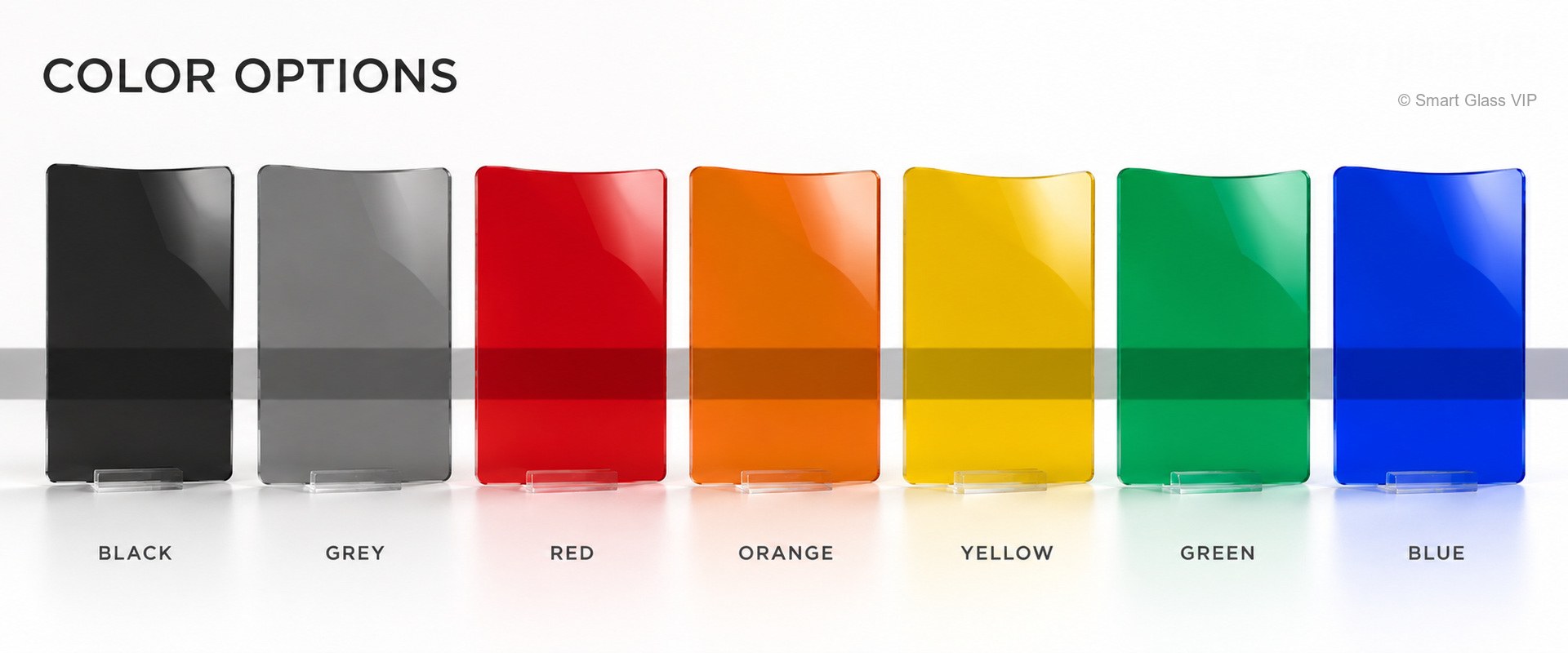
Because colour is a special order, specify it at quotation stage and ask for a physical sample before committing a whole wall. Availability and lead time vary by hue.
2. Gradient and dimming: control the level, not just the state
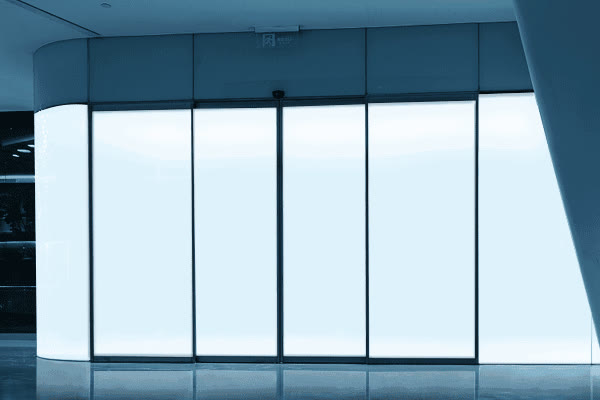
Two different things share the word gradient. Dimmable film uses a variable-voltage transformer so a pane can sit anywhere between frosted and clear rather than only at the two ends; not every film and transformer pair supports it, so it has to be specified up front. A printed gradient - a frost-to-clear fade, a band or a logo - is layered with the switchable film, so the pattern stays permanent while the rest of the pane switches. Both are increasingly requested for retail facades that want visual rhythm and for lobbies that want a softer transition than a hard on/off line.
3. Patterns and engraving: logos that appear on demand
Laser-cut and printed patterns let a logo, geometric motif or brand mark appear when the film is frosted and disappear when it clears - useful for reception glass, retail windows and corporate lobbies where branding should be visible but not permanent. Zone switching takes it further: different areas of one pane are wired separately, so a logo band can stay frosted while the rest of the wall clears, or the top half of a window can be private while the bottom stays open.
4. Blinds without blinds: zebra and banded effects
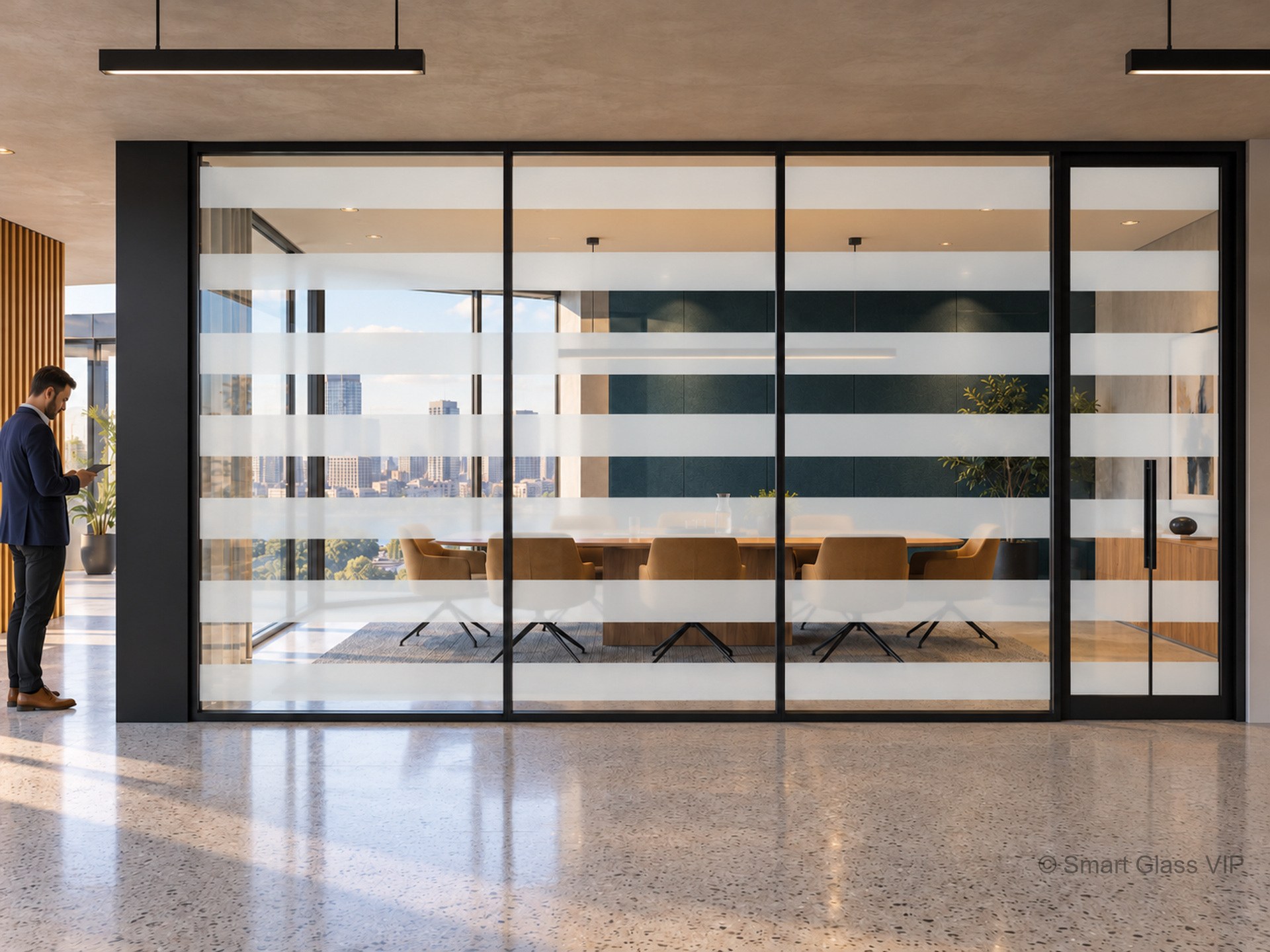
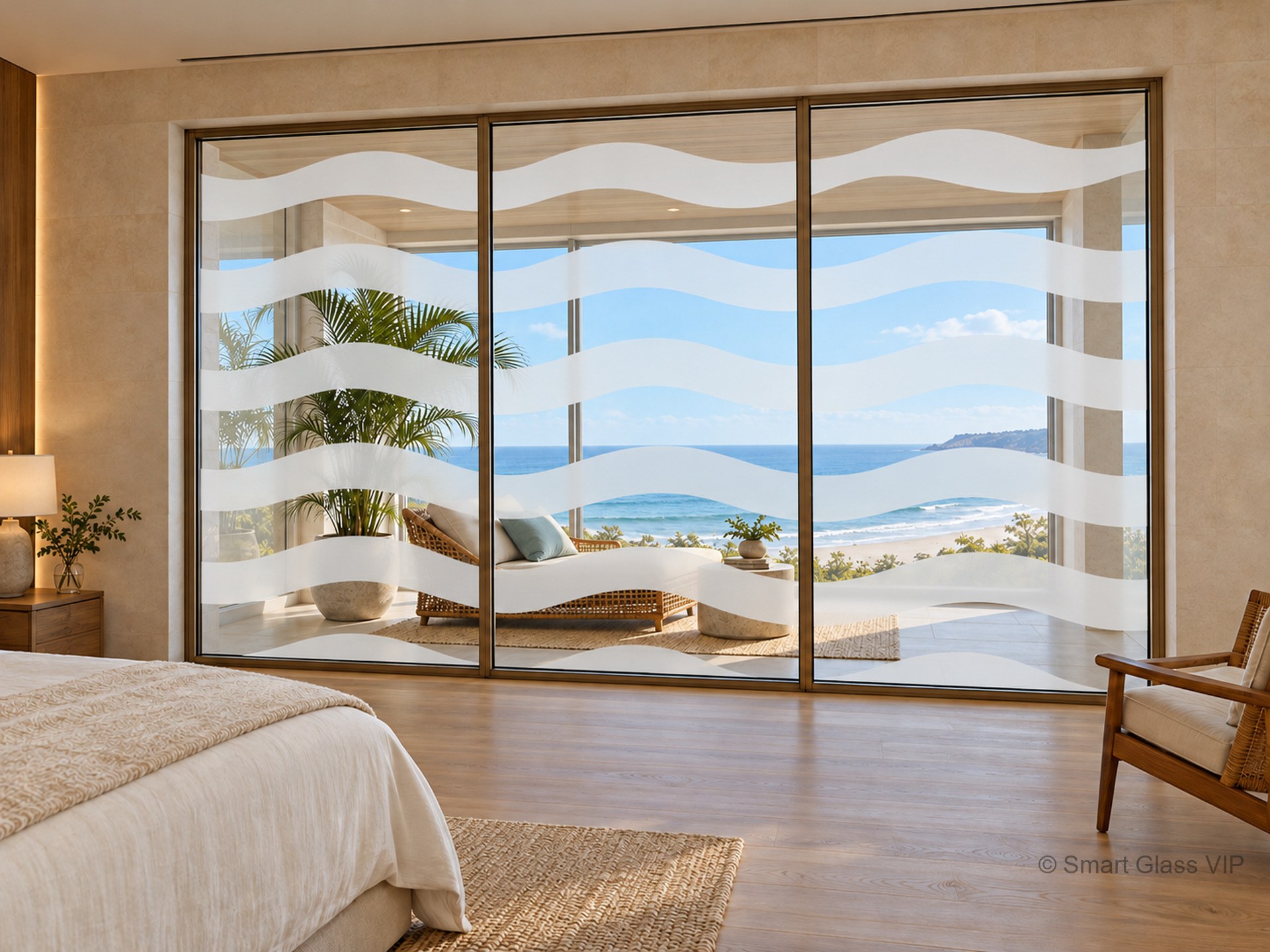
Cutting the film into horizontal bands recreates the familiar look of fabric blinds inside the glass itself. Alternating clear and frosted stripes let daylight through while still giving a room a measure of separation, with no slats, cords or rollers to dust or jam. The bands can be wired by zone, so a switch can frost a few stripes or the whole pane - a favourite for offices that want privacy on demand without covering the view.
5. App control: from a wall switch to a building system
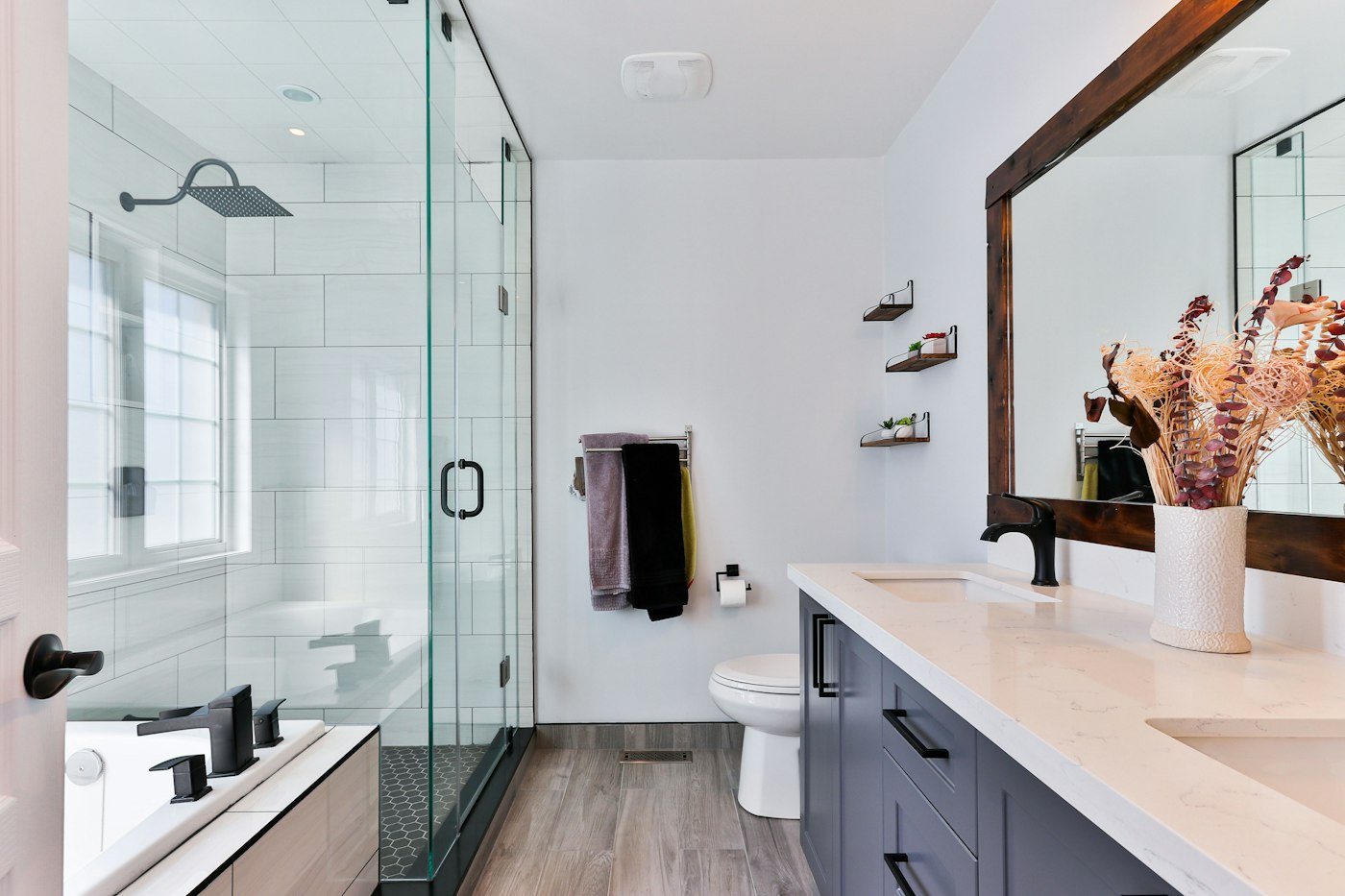
Control has moved well beyond a light switch. Standard options now include remote, wall switch, mobile app, voice assistants such as Alexa, Google Home and Siri, and smart-home platforms including Tuya, SmartThings and Apple Home. For commercial work there are open APIs plus hotel RCU and meeting-room systems such as Crestron, Extron, AMX, MS Teams and Zoom. A boardroom can go opaque automatically when a calendar event starts; a hotel bathroom can switch on a do-not-disturb scene; a facade can tint with the sun.
6. LED film: turn the glass into a transparent screen
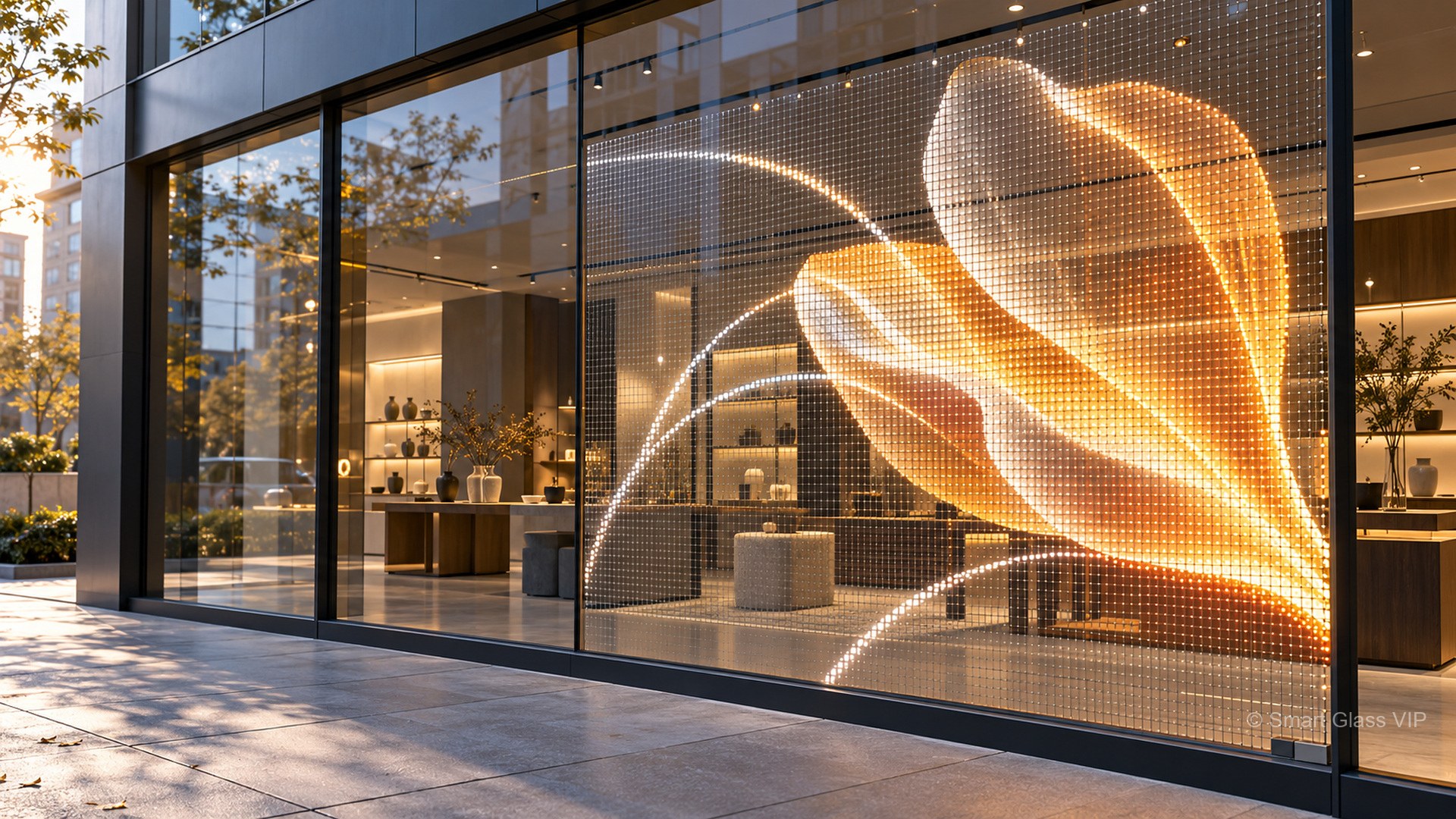
Transparent LED film is the newest layer in the stack. Off, it is 80-90% transparent and nearly invisible; on, it plays full-colour video at 1,000-3,000 nits. Because it is thin and rollable, it goes onto existing glass - shop windows, lobbies, transport hubs, museums and event stages. Digital out-of-home advertising is growing faster than static signage, and brands report markedly higher attention on window displays that move. Pixel pitch decides the balance between resolution and transparency: P3-P6 for close viewing, P6-P10 for large facades seen from a distance.
7. What it means commercially
Each option carries a different value story, and that is the real reason the menu has expanded. Colour and pattern turn a privacy product into a design feature that can carry a brand. Dimming and app control move it into the smart-building budget, where it competes with blinds, shading and AV. LED film turns a window into an advertising surface with its own revenue case. For contractors, the practical point is to specify early: colour, dimming and zoning change the film, the transformer and the lead time, and retrofitting them later costs more than choosing them at quote stage.
- Colour and pattern - design differentiation and brand visibility.
- Dimming and zone control - comfort, energy and premium positioning.
- App, API and scene control - smart-building and hospitality integration.
- LED film - advertising revenue and experiential retail.
Choose the version that earns its place
The chemistry is the same; the value comes from the configuration. Tell us the space, the look you want and how it should be controlled, and we will quote the right build - with samples so you can see the colour and the frost before the order.
Specifying a project?
Send glass dimensions and the look you have in mind - an itemized engineer quote arrives within 24 hours.